How to Open Group On Facebook
Thursday, July 5, 2018
Edit
How To Open Group On Facebook, Having a Facebook Page is quite much a need to these days. Whether anybody sees exactly what you publish there is a completely various story. They also aren't the best for collaborating activities or sharing ideas with a particular group of people.
If you have to have a discussion with a variety of people related to your cause, you might want to consider a Facebook Group (or several groups) in addition to your nonprofit's official Facebook Page.
Why?
It's much simpler to speak with everybody in a Facebook Group Posts by individuals in a Group all appear in the same place-- it's version of a Timeline-- instead of your Page which just reveals posts by the administrators by default.
You can manage who can join your group and limit posts to relevant content. If you have to speak to volunteers about an event, then the Group has to only be comprised of those volunteers. And you just have to talk about stuff related to offering. Volunteers don't have to scroll through other posts you would have to make to your Page.
You can also upload or create files for the Group, produce events, send messages, and also post photos or videos.
We use Facebook Groups for our All-Access Pass Holders, mentoring groups, and e-clinics as a method for participants in those programs to connect with our specialists along with each other.
You will have to log in to Facebook with your personal profile. At this time, a Facebook Page can not produce a group-- it needs to be an individual. If you do not desire your personal profile connected with the group, then produce a 2nd profile to just manage your Groups.
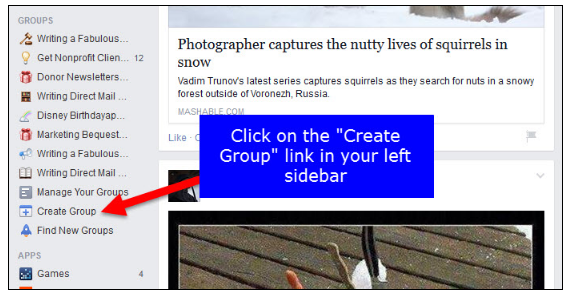
When you are visited, look to the left sidebar and find "Groups.".
A discussion box will appear requesting some fundamental info about your Group.
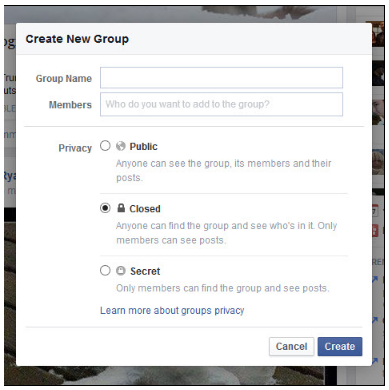
Complete the name of the Group. If you desire a Closed or a Trick Group you require to add at least one friend. Start typing a name in the "Members" box, then your good friends will be listed in drop-down form.
Group Personal privacy.
After you select the privacy setting, click the "Create Group" button.
Next, you will be asked to select an icon which will appear in the sidebar next to the name of your group. There are lots of to select from or you can skip this totally. You can return and include one later.
After you pick an icon (or avoid that action) you will be required to your Group's main page which will look like this in the beginning.

To finish your Group, upload a cover image-- the perfect size is 784 x 250.
Then complete a description with a welcome message or any instructions for the group.
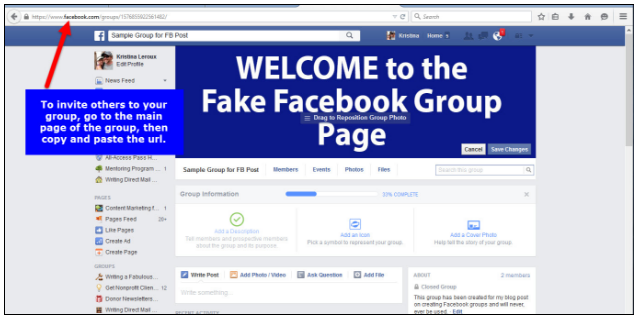
To welcome others to your Group simply copy and paste the url * then send it to them.
When somebody who is not already in your Group goes to that url, they will triggered to join the group.
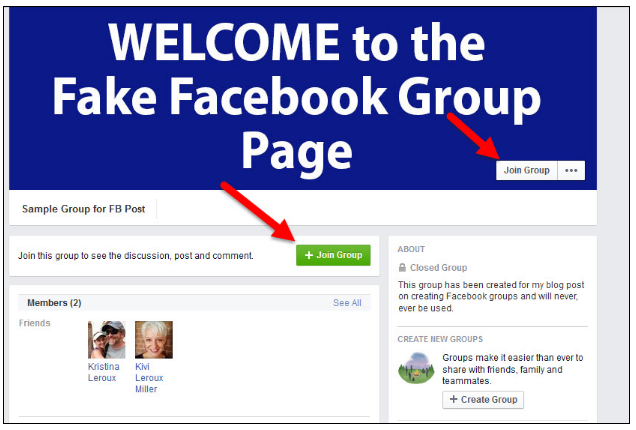
For a Closed Group:.
Non-members will only have the ability to see the cover image, the name of the Group, its description and its members. No content can be accessed.
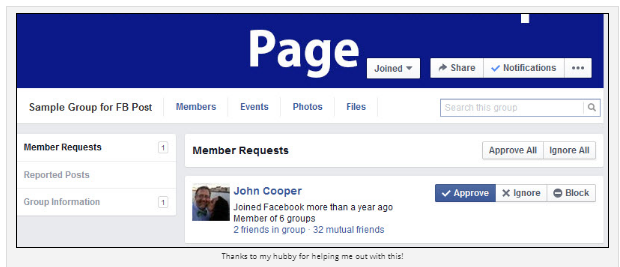
When somebody clicks on that "Join Group" button, you will receive a notice. You can decide to include that person, neglect that person, or block that person:.
Those are the essentials for developing a Group, however there are more choices to think about. Click the "..." in the cover photo area, then select "Edit Group Settings.".

Here you can modify the standard setting too whether any member can add and approve new members or if you just want administrators with that power.
You can also control the material posted. Decide whether any member can post or simply admins. And if you do enable any member to publish, you can also subject those posts to approval by an admin.
* New feature I just saw while developing this post-- You can now apparently create a customized web address for your Group that makes it simpler to bear in mind the url. It's the exact same as developing the url for your personal profile or your Page. As I wasn't sure this function was readily available to everybody (Facebook is well-known for slowly rolling out features), I am leaving the old method up for purposes of this post. The original url (the one with all the numbers) will still work even after you have personalized it.
If you have to have a discussion with a variety of people related to your cause, you might want to consider a Facebook Group (or several groups) in addition to your nonprofit's official Facebook Page.
Why?
It's much simpler to speak with everybody in a Facebook Group Posts by individuals in a Group all appear in the same place-- it's version of a Timeline-- instead of your Page which just reveals posts by the administrators by default.
You can manage who can join your group and limit posts to relevant content. If you have to speak to volunteers about an event, then the Group has to only be comprised of those volunteers. And you just have to talk about stuff related to offering. Volunteers don't have to scroll through other posts you would have to make to your Page.
You can also upload or create files for the Group, produce events, send messages, and also post photos or videos.
We use Facebook Groups for our All-Access Pass Holders, mentoring groups, and e-clinics as a method for participants in those programs to connect with our specialists along with each other.
How To Open Group On Facebook
You will have to log in to Facebook with your personal profile. At this time, a Facebook Page can not produce a group-- it needs to be an individual. If you do not desire your personal profile connected with the group, then produce a 2nd profile to just manage your Groups.
When you are visited, look to the left sidebar and find "Groups.".
A discussion box will appear requesting some fundamental info about your Group.
Complete the name of the Group. If you desire a Closed or a Trick Group you require to add at least one friend. Start typing a name in the "Members" box, then your good friends will be listed in drop-down form.
Group Personal privacy.
- If it does not matter who joins your Group or who sees the material posted, then you can create a Public Group. Anyone can find your Group, join it and see and publish content.
- If you would like to limit who joins your Group and the material just be seen by those in the Group, then create a Closed Group. I advise this setting. Members should ask for to join the Group and be approved by an admin prior to they can see any material. But you do not have to be Facebook buddies with somebody in order for them to find the Group. You can send the Group's url to welcome people to sign up with.
- While a Secret Group is similar, members can only add their Facebook Friends. If you send out the url to someone not in the group, they will not have the ability to discover it nor see its members.
After you select the privacy setting, click the "Create Group" button.
Next, you will be asked to select an icon which will appear in the sidebar next to the name of your group. There are lots of to select from or you can skip this totally. You can return and include one later.
After you pick an icon (or avoid that action) you will be required to your Group's main page which will look like this in the beginning.
To finish your Group, upload a cover image-- the perfect size is 784 x 250.
Then complete a description with a welcome message or any instructions for the group.
To welcome others to your Group simply copy and paste the url * then send it to them.
When somebody who is not already in your Group goes to that url, they will triggered to join the group.
For a Closed Group:.
Non-members will only have the ability to see the cover image, the name of the Group, its description and its members. No content can be accessed.
When somebody clicks on that "Join Group" button, you will receive a notice. You can decide to include that person, neglect that person, or block that person:.
Those are the essentials for developing a Group, however there are more choices to think about. Click the "..." in the cover photo area, then select "Edit Group Settings.".
Here you can modify the standard setting too whether any member can add and approve new members or if you just want administrators with that power.
You can also control the material posted. Decide whether any member can post or simply admins. And if you do enable any member to publish, you can also subject those posts to approval by an admin.
* New feature I just saw while developing this post-- You can now apparently create a customized web address for your Group that makes it simpler to bear in mind the url. It's the exact same as developing the url for your personal profile or your Page. As I wasn't sure this function was readily available to everybody (Facebook is well-known for slowly rolling out features), I am leaving the old method up for purposes of this post. The original url (the one with all the numbers) will still work even after you have personalized it.